Overview
About the program
The Master of Engineering (MEng) in Artificial Intelligence takes an organization’s employees from the foundations of AI to its latest advances: machine learning, deep learning, computer vision, natural language processing and generative AI, through courses and hands-on projects.
KAUST offers it to organizations, not to individual applicants. The organization nominates its employees; those admitted join as KAUST students, follow KAUST’s standard curriculum and are taught by KAUST faculty. KAUST currently runs the program for the Ministry of Interior.
A KAUST qualification
Graduates earn a Master of Engineering awarded by KAUST.
At your organization
Classes run on weekends at the organization’s own venue, so employees keep working while they study.
Projects on your challenges
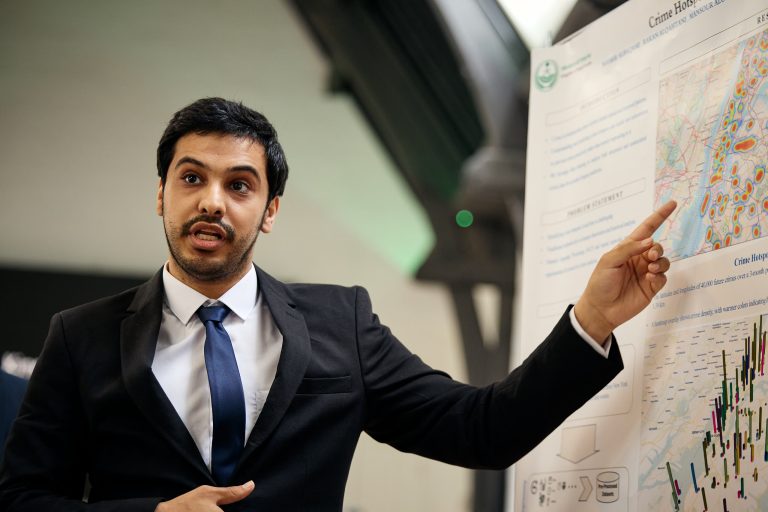
Each student’s capstone project tackles a real problem from their own organization.
Admission
How students are selected
Every student starts with the bridging program. Their grades in it decide the program they join.
Step 1
Online preparation
4 weeks
Online, self-paced
The organization’s nominees study on their own for the screening exam.
Step 2
Screening exam
2 hours
Written exam
Those who pass join the bridging program.
Step 3
Bridging program
8 weeks
In person, Sunday to Thursday
Two weeks each of Python programming, linear algebra, calculus, and probability and statistics: the mathematics and programming behind AI, taught by KAUST faculty and experts from leading universities.
Certificate of completion
Step 4
Placement
An average above 90% and an English interview lead to the Master of Engineering in AI. An average above 75% leads to the Postgraduate Diploma in AI.
The bridging program prepares students but doesn’t guarantee a place. An interview checks each student’s English, and those who need it take an English course.
36 credit hours
Curriculum
Two years: four semesters of three courses each, and a summer term between them.
12
credit hours of core courses
18
credit hours of electives
6
credit hours of capstone project
Year 1 · Fall
Semester 1
AMCS 250P Applied Linear Algebra and Vector Calculus Elective
STAT 210P Applied Statistics and Data Analysis Elective
CS 220P Applied Data Analytics Core
Year 1 · Spring
Semester 2
AMCS 211P Applied Numerical Optimization Elective
CS 229P Machine Learning with Applications Core
DSA 201P Practical Tools for Data Science Core
Year 1 · Summer
Summer term
Enrichment program at KAUST and partner universities Summer
Year 2 · Fall
Semester 3
CS 283P Deep Generative Modeling Core
CS 223P Applications of Deep Learning in Visual Computing Elective
CS 299 Capstone Project Capstone
Year 2 · Spring
Semester 4
CS 284P Natural Language Processing Elective
ECE 265 Machine Learning Hardware Elective
CS 299 Capstone Project Capstone
The courses
CS 220P · Applied Data Analytics
Probability and statistics for data analysis, with concrete examples: statistical methods for decision-making and an introduction to statistical modeling in Python. (40% theory, 60% practice)
CS 229P · Machine Learning with Applications
Supervised and unsupervised learning: linear and logistic regression, deep learning (MLPs, CNNs, RNNs) and clustering, with an introduction to transformers and attention. Students build, train and evaluate models and weigh their ethical implications. (60% theory, 40% practice)
DSA 201P · Practical Tools for Data Science
The practical tools of data science and machine learning, learned hands-on. (40% theory, 60% practice)
CS 283P · Deep Generative Modeling
Variational autoencoders, GANs, normalizing flows, diffusion and energy-based models, and large language and multimodal models, applied to vision, music and language, with a research project. (50% theory, 50% practice)
AMCS 250P · Applied Linear Algebra and Vector Calculus
Matrices, subspaces, least squares, QR and eigen decompositions, then vector calculus, gradients, the Hessian and gradient descent: the mathematics behind AI models and cybersecurity analytics. (80% theory, 20% practice)
STAT 210P · Applied Statistics and Data Analysis
The fundamentals of probability and statistics for data analysis, from statistical methods for decision-making to statistical modeling in Python. (80% theory, 20% practice)
AMCS 211P · Applied Numerical Optimization
Formulating and solving linear and nonlinear optimization problems and interpreting their solutions, with state-of-the-art software, in machine learning, imaging, design and data fitting. (80% theory, 20% practice)
CS 223P · Applications of Deep Learning in Visual Computing
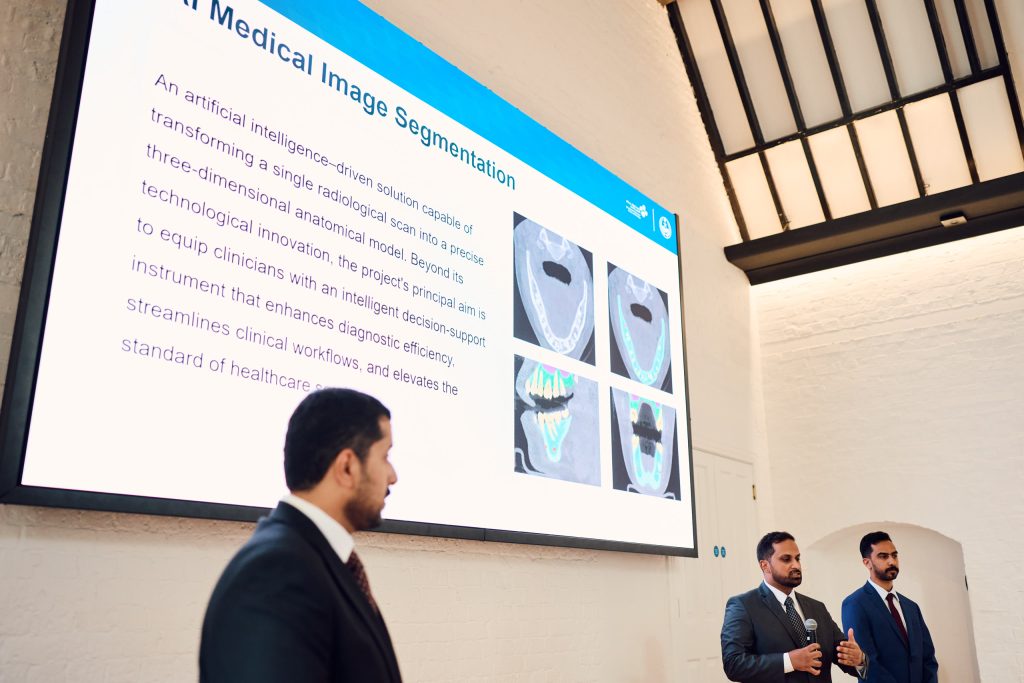
Training and fine-tuning deep networks for image and video classification, object detection and segmentation on the organization’s own data: lectures in the morning, Python notebooks in the afternoon. (40% theory, 60% practice)
CS 284P · Natural Language Processing
Traditional and deep learning approaches to language, from RNNs, LSTMs and GRUs to transformers, large language models and multimodal models, with prompt engineering and a final project. (60% theory, 40% practice)
ECE 265 · Machine Learning Hardware
The hardware behind machine learning: how architectures trade accuracy, latency and energy, and how models map onto different platforms. (70% theory, 30% practice)
CS 299 · Capstone Project
An AI and machine learning project with practical outcomes for the student’s work at their organization, over the last two semesters. (50% theory, 50% practice)
To graduate, students need a cumulative GPA of at least 3.0 and at least a B- in every course.
Summer term
A summer at KAUST and Oxford
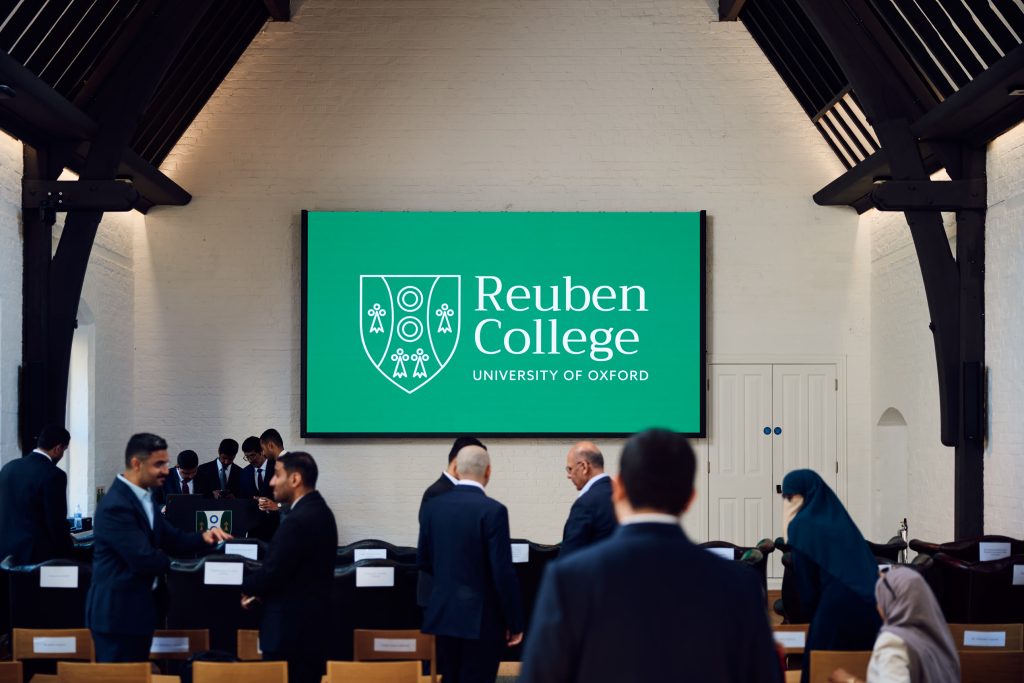
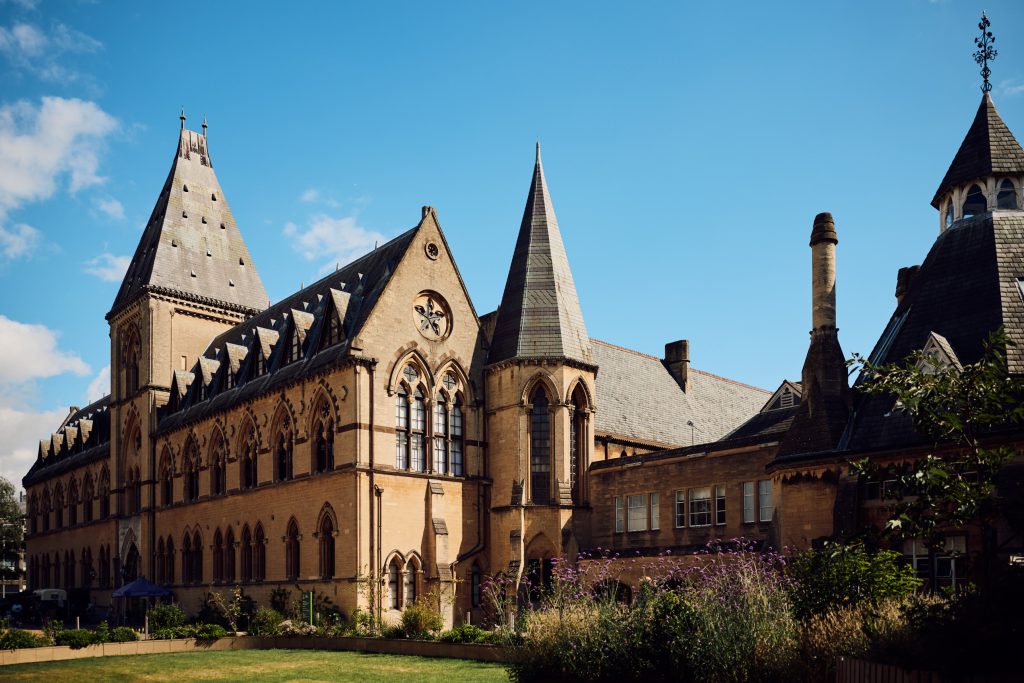
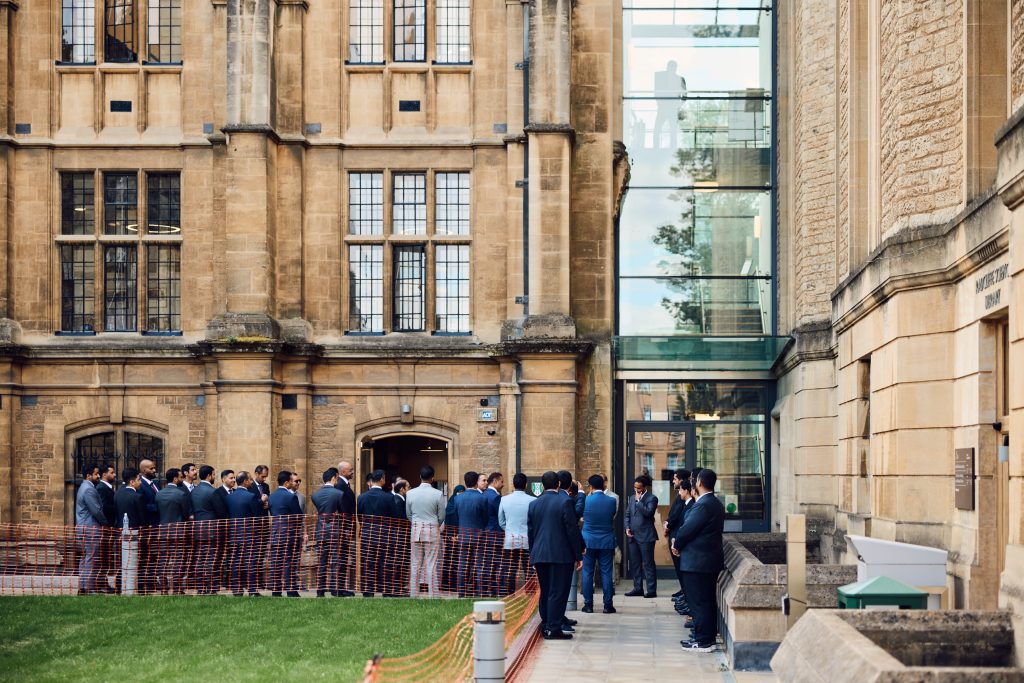
Between the two years, students spend an enrichment summer at KAUST in Thuwal and at partner universities such as the University of Oxford, and start shaping their capstone project.
Now showing
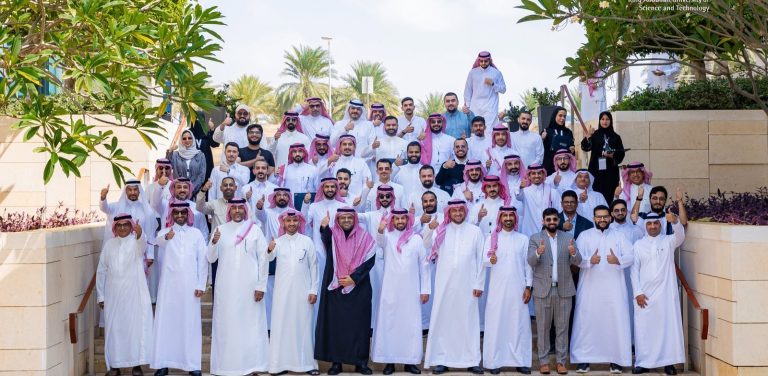
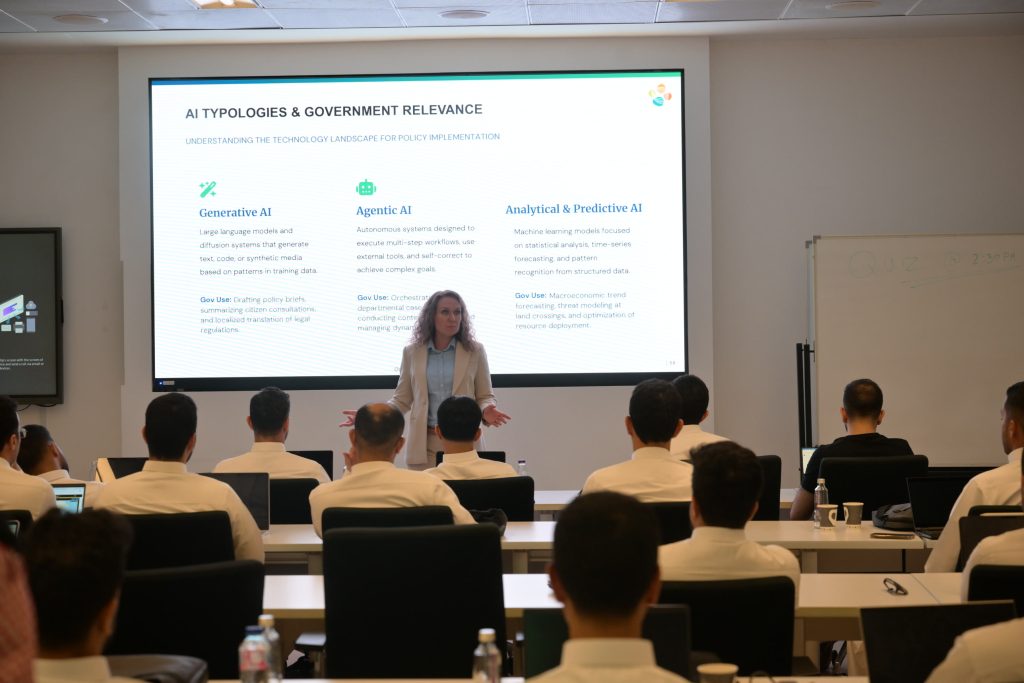
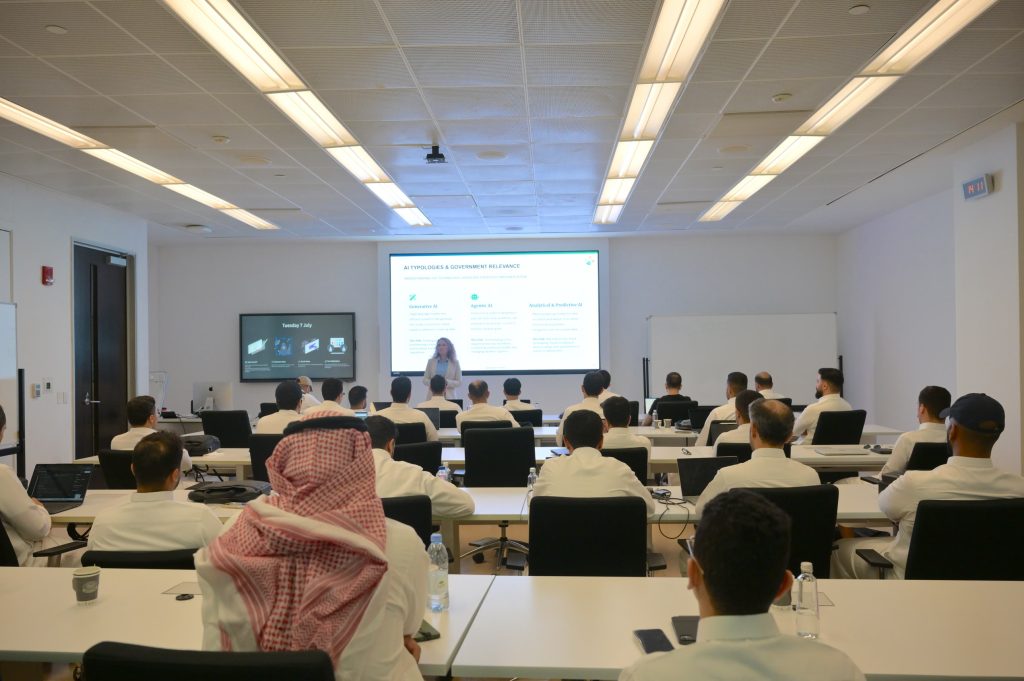
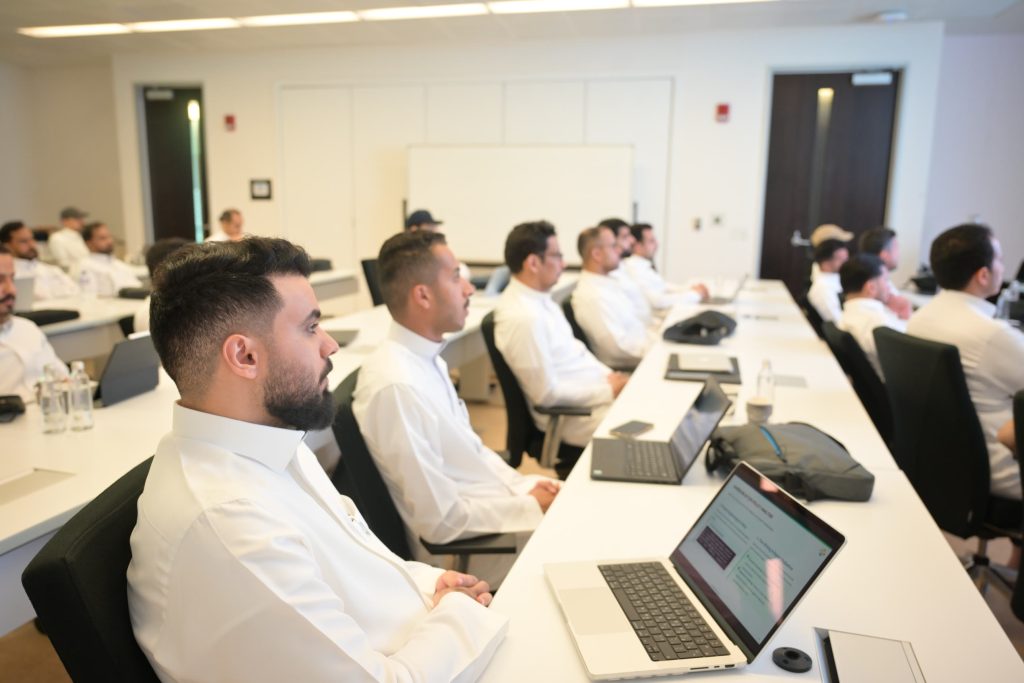
MOI MEng AI: summer at Oxford 2026


MEng students at the University of Oxford in the summers of 2026 and 2025, and at KAUST in July 2026.


Requirements
Who can join
A bachelor’s degreeIn science, mathematics or engineering, checked before the program starts.
Nominated by their organizationThrough the organization’s own internal process.
A bridging average above 90%The screening exams must be passed too.
EnglishSpoken and written, checked in an interview.
For organizations
Bring the program to your organization
Contact us
Send us a message through the contact form and choose “Degree programs for organizations”.
Plan the cohort
We agree with you on the schedule, the venue and the number of students.
Nominate employees
Your nominees prepare online, sit the screening exam and take the bridging program.
Start the program
The students admitted study on weekends at your venue, taught by KAUST faculty.
FAQ
Questions
Can I apply on my own?
No. KAUST offers this program to organizations for their employees. If your organization is interested, it can contact us.
Where and when are classes held?
On weekends, at the organization’s own venue. The summer term is at KAUST and partner universities.
Who teaches the program?
KAUST faculty. KAUST alone designs the curriculum and teaches it.
What if a student’s grades are between 75% and 90%?
With a bridging average above 75%, they can join the Postgraduate Diploma in AI, and the best diploma graduates can continue to this master’s degree.